

PAST PROJECTS
Graduate Assistance Program
2025-2026 Awardees

SHAHRIN SHAHAB
Ph.D. Candidate
School of Public Policy
Oregon State University
Project Title: Exploring the Influence of Social Vulnerability on Community Resilience to Wildfires in Rural Oregon Communities
Project Summary: Wildfires have become one of the most pressing environmental challenges facing Western rural communities. Current wildfire resilience planning is largely driven by biophysical data and overlooks the critical role of social vulnerability, particularly at the household level, and more specifically for non-homeowners (e.g., renters). This gap results in incomplete or inequitable resilience strategies and leaves many rural and vulnerable populations underprepared and underserved.
This study aims to address this gap by asking: Do household-level social vulnerabilities influence wildfire preparedness and community resilience outcomes in rural Oregon? Specifically, the study will target unexplored rural renters to (1) measure household preparedness for wildfires, (2) identify social vulnerability factors that affect preparedness, and (3) compute community-level resilience scores by integrating preparedness and vulnerability data.
The study builds directly on recently completed data collection funded by the Western Fire Chiefs Association. That data collection focused exclusively on homeowners in rural communities, whereas the proposed project expands this scope by collecting data from renters. The study will be conducted using a quantitative, survey-based design grounded in the hazards-of-place framework. Comparative analyses will reveal disparities within and across rural communities, while resilience scores will identify which communities are more able to withstand and recover from wildfire.
Expected outcomes include the first household-level, survey-based assessment of wildfire preparedness disparities between homeowners and renters in rural Oregon. It will also provide a replicable framework for wildfire resilience research across the Western region. Findings will be shared with wildfire managers through policy briefs and fact sheets, which are expected to inform place-based strategies to reduce vulnerabilities, improve preparedness, and strengthen recovery capacity. Results will also be disseminated broadly via conference presentations and peer-reviewed publications. Potential funding sources to expand the project in the future include the Western Fire Chiefs Association (WFCA) and the USDA Community Wildfire Defense Grant Program.
Project Collaborators: Dr. Lori Cramer and Dr. Erika Wolters.
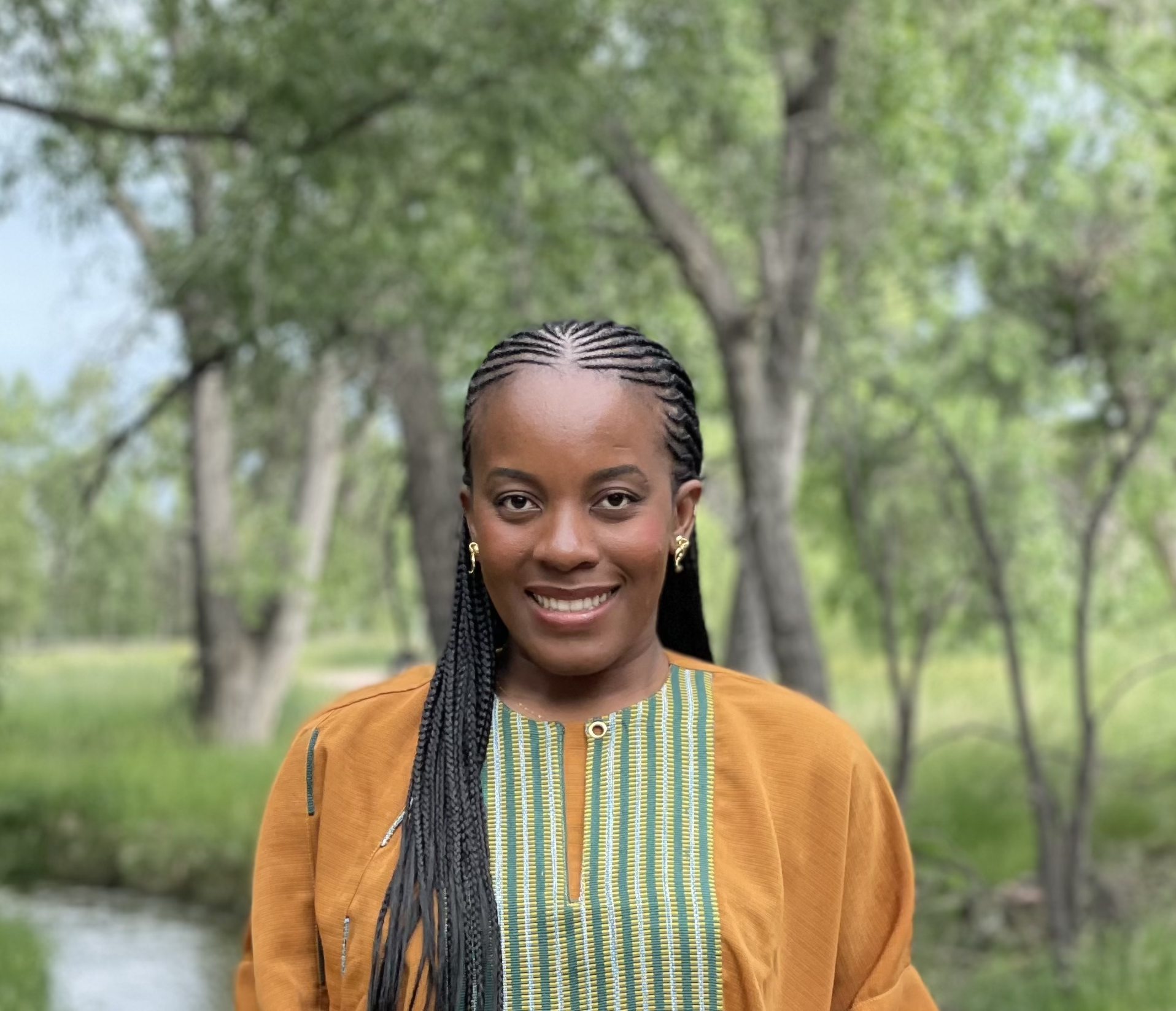
YVETTE UWINEZA
Ph.D. Candidate
Department of Agricultural and Resource Economics
Colorado State University
Project Title: The Economic Cost of Reductions in Irrigated Agricultural Land: A Comparison of Permanent Water Sales and Intermittent Fallowing
Project Summary: Colorado’s Lower Arkansas River Valley has lost considerable irrigated acreage over the last three decades as growing cities purchase agricultural water rights. The reductions in irrigated acreage have reduced farm incomes and raised concerns about the long-term sustainability of rural communities in the area.
Although permanent transfers of water rights have been common, the state has also promoted alternative transfer mechanisms (ATMs), such as rotational fallowing, to share water between cities and farms without completely drying up agricultural land. However, there is little evidence on how the economic impacts of ATMs compare to permanent transfers of water rights.
This project addresses that gap by integrating parcel-level data with economic modeling to evaluate how irrigation reductions affect both farm profitability and the regional economy. Using data from OpenET, parcels will be classified as irrigated, permanently dry, or intermittently irrigated. Profitability estimates will then be linked to an IMPLAN model to simulate changes in employment, household income, and tax revenues under both permanent sales of water rights and rotational fallowing.
These findings will help policymakers, water managers, and local stakeholders better understand the trade-offs of different water transfer mechanisms. The results will be shared through stakeholder meetings, academic presentations, and a peer-reviewed publication. The project will also lay the foundation for future proposals to programs such as USDA NIFA’s Agriculture and Food Research Initiative (AFRI) and the Colorado Water Conservation Board’s Alternative Transfer Methods Grant Program.
Project Collaborators: Dr. Jordan Suter and Dr. Rebecca Hill
Fellow Projects
2025-2026 Awardees

HANNAH RODGERS
Research Scientist
Department of Agriculture & Applied Economics
University of Wyoming
Product:
Project Title: Launching an On-Farm Research Network for Wyoming
Project Summary: On-farm research is crucial for adapting and sharing sustainable practices, especially in rural, semiarid environments like Wyoming where producers need locally tested guidance. Wyoming currently lacks an on-farm research group, despite demonstrated demand from producers, researchers, and Extension. This project establishing a Wyoming On-Farm Research Network to build the groundwork for successful on-farm research collaborations.
This network will align research with producer needs, connect producers with researchers and Extension, and accelerate the adoption of new practices. Additionally, the network will increase Wyoming’s competitiveness for the growing number of participatory research grants, such as the Western SARE Professional-Producer, NRCS Conservation Innovation, and several private foundations.
- This network will align research with producer needs, connect producers with researchers and Extension, and accelerate the adoption of new practices. Additionally, the network will increase Wyoming’s competitiveness for the growing number of participatory research grants, such as the Western SARE Professional-Producer, NRCS Conservation Innovation, and several private foundations.
- Co-develop surveys to identify interested researchers and producers,
- Disseminate surveys through Extension and nonprofit partners,
- Build an online hub and list-serve to foster collaboration, share tools and recommendations relevant to on-farm projects, and publish resources, and
- Leverage the network to apply for private and public funding and spur additional projects.
Partners from the University of Wyoming, Colorado State University, Extension, the Wyoming Food Coalition, and the Integrated Rocky Mountain-region Innovation Center for Healthy Soils (IN-RICHES) will ensure that this effort is appropriate, durable, and impactful. Ultimately, this network will strengthen research and Extension capacity, support farmer-led innovation, and improve agricultural adaptation, while establishing a scalable framework for semiarid systems across the West.

LAURIE WAYNE
Community Nutrition, Health, and Food Systems Advisor
University of California Agriculture and Natural Resources
Project Title: Understanding Barriers, Habits, and Attitudes Influencing SNAP benefits usage in Rural Northern California: a community-engaged participatory study
Project Summary: This project asks: Why do Supplemental Nutrition Assistance Program (SNAP/CalFresh) beneficiaries in Modoc, Lassen, and Siskiyou Counties rarely spend their benefits on locally produced foods, despite the presence of local outlets that accept SNAP? Although almost $1 million in SNAP benefits flow into the three subject rural counties monthly, local purchases represent just a small fraction of the benefits used. Understanding this disconnect is critical for strengthening rural food systems and economies.
The project will use a community-based qualitative design with focus groups made up of SNAP recipients and semi-structured interviews with stakeholders. About 60 SNAP diverse participants and 15 local stakeholders (grocers, market managers, SNAP outreach staff, community leaders) will be recruited from across the region. Focus groups will explore beneficiaries’ perceptions, habits, and social norms around SNAP spending and engage participants in co-developing proposals to optimize local SNAP spending. Stakeholder interviews will examine structural and logistical barriers faced by local retailers, gathering input on existing and potential strategies for overcoming these barriers. Data will be recorded, transcribed, and thematically analyzed, with member-checking to validate findings. Results will be synthesized into a regional report.
This approach is innovative in centering SNAP users’ lived experiences—rather than only stakeholder assumptions or observations—and pairing these insights with operational perspectives to identify both demand- and supply-side barriers. The participatory design also ensures recommendations are grounded in local realities and supported by the community, increasing the likelihood of adoption.
Results will be shared through community listening sessions, stakeholder briefings, Extension networks, and open-access publications, and will be presented at academic conferences. Future funding will be sought from USDA’s GusNIP and FINI programs, state CalFresh Healthy Living funds, and public and private funders focused on food systems and rural development, to pilot the recommended interventions and expand this model across rural western states.
Multi-State Projects
2025-2026 Awardees
Institutions: Oregon State University, Washington State University, Colorado State University
Project Title: Weathering the Storm: Supporting Rural Agricultural Communities in Navigating Environmental Stress and Grief
Principal Investigator
MAUD POWELL
Professor; Small Farms Program
Oregon State University
Project Team

CHAD KRUGER
Director
Center for Sustaining Agriculture and Natural Resources; Institute for Northwest Energy Futures
Washington State University
TEAL POTTER
Research Associate
Center for Sustaining Agriculture and Natural Resources
Washington State University

ADAM SNITKER
Graduate Research Assistant
Department of Sociology
Colorado State University
Project Summary: The rapid acceleration of ecological change and increase in severity of weather events is bringing new challenges to rural, agricultural communities, not only in terms of drought and wildfire, but also mental health and emotional well-being. Agricultural professionals who support farmers are also experiencing increasing demands to provide support in the wake of extreme weather events. Research shows that people who increase their awareness of and talk about stress and grief related to ecological change are more resilient, likely to take action, and have a better quality of life.
Oregon State University’s Building Resilience in Farmers and Ranchers project designed an intervention in the form of a 75-minute workshop to address ecological stress as well as a train-the-trainer program. Workshop survey feedback indicates a high degree of short-term benefits among both producers and agricultural professionals.
This project will extend the reach of the curricula beyond Oregon to Washington and Colorado. The workshop will be offered in three states two times each during the grant period, with approximately 15 producers in each workshop. Ninety producers will have access to information about mental and physical health impacts of ecological changes and learn about established resilience practices. The train-the-trainer program will be offered two times, benefiting a total of 40 agricultural professionals.
The project’s research component will explore whether and how the curricula result in mid-range behavior and attitude changes and specifically, adoption of resilience practices. Three months after the completion of the workshops, 20 producers will be interviewed to discover behavior and/or attitude changes.
Findings will be disseminated through the publication of a peer-reviewed journal article and presentations at two regional agricultural conferences.
Other potential funding sources include a Western SARE Professional Development Grant and grants from the Western Center for Risk Management Grant.

Graduate Assistance Program
2024-2025 Awardees

RAE NICKERSON
Research Assistant
Department of Wildland Resources
Utah State University
Project Title: Evaluating the Effectiveness of Range Riding at Reducing Carnivore-Livestock Conflict in the American West
Project Summary: The socio-economic impacts of livestock predation by large carnivores are disproportionately borne by livestock producers (hereafter, producers). Carnivore-livestock conflicts undermine resilient food systems by threatening rural economic interests, human safety, and quality of life. Effective solutions require tools that support operational flexibility and withstand changing environmental, social, and economic climates. Unfortunately, tools aimed at reducing carnivore-livestock conflict often lack the local, experiential, and generational knowledge needed to ensure tools are applicable, versatile, and worth investment. Range riding – the use of human presence where livestock are grazed to deter carnivores – is a tool that may increase food supply resilience and empowers rural producers. Yet to date, the effectiveness of range riding has not been comprehensively studied. Through partnerships with 600+ livestock producers in the western USA, Rae Nickerson and the team are studying the effectiveness of range riding at reducing livestock direct losses (depredation and injury) and indirect losses (reduced reproduction, body condition, and increased illness) to define under which operational, environmental, and economical contexts range riding can enhance food resiliency and sustain rural livelihoods. Using interdisciplinary methods and coproduction processes with their ranching, NGO, and agency partners, they will interpret and disseminate findings through three producer-led peer-learning workshops, 2-3 scientific publications, a fact sheet, and 1-2 Extension resources. Their funding originally came from a Conservation Innovation grant (NRCS) and was later supplemented by Western and Student SARE grants (NRCS). Support from the Western Rural Development Center will support their final year of co-produced data analysis and writing with their producer and rider partners and fund an educational training for those partners. Their findings will help improve the profitability and long-term sustainability of ranches operating in areas with predators by determining how to deploy riders and design range rider programs that are practical, applicable, and meaningful to rural communities.

RICHARD ACQUAH-SARPONG
Research Assistant
Department of Applied Economics
Oregon State University
Project Title: Evaluating the impact of wildfires on firm migration in rural western US
Project Summary: The increasing frequency and severity of wildfires in the rural Western United States pose significant economic risks, particularly for firms that may be forced to relocate due to repeated exposure to fire and smoke. Businesses in fire-prone areas face direct destruction of property and infrastructure as well as indirect disruptions such as road closures, power outages, and degraded air quality from wildfire smoke. These disruptions can lead to reduced sales, employment losses, and economic contractions, prompting firms to migrate to regions perceived as less risky. However, the literature has largely overlooked the impact of wildfire exposure on firm migration, despite the well-documented effects on housing markets, labor supply, and community resilience.
This project addresses this gap by examining how wildfires influence firm migration in the rural Western region and estimate economic impacts of wildfire induced firm relocation on local employment, wages, and tax revenues in rural areas. This research develops a comprehensive wildfire exposure index that integrates both smoke exposure and population weighted burned area. Using firm-level data from the National Establishment Time-Series and wildfire data from the USGS Monitoring Trends in Burn Severity project, Richard will conduct a rigorous empirical analysis to quantify the effects of wildfire exposure on firm migration patterns. The study also employs policy simulation and impact assessment to simulate firm migration trends under different wildfire scenarios and its impact on rural economies. The findings of this study will inform policymakers, development agencies, and community planners on how to mitigate the negative economic impacts of wildfires and retain businesses in rural communities. Results will be disseminated through peer-reviewed journals, regional economic conferences, extension workshops, and policy briefs. This research provides a foundation for future funding opportunities from agencies such as the National Science Foundation (NSF), the United States Department of Agriculture (USDA), and regional economic development grants.
Fellow Projects
2024-2025 Awardees

XUE DONG
Extension Regional Specialist
Vibrant Communities
Colorado State University
Project Title: Enhancing AI-Powered Agritourism Chatbot through Deep Learning: Advancing Knowledge Dissemination, Decision-Making, and Extension Education
Project Summary: This project aims to refine and expand the capabilities of the AI-Powered Agritourism Toolkit (AgriTourismAI.com) through advanced deep learning techniques. Small to mid-sized agritourism businesses often face significant challenges, including limited access to advanced planning and marketing tools, difficulties in navigating regulatory compliance, and a lack of personalized support for risk management and impact assessment. Existing solutions are often not tailored to the unique needs of rural communities, creating a gap that this project seeks to address.
Developed by the Principal Investigator (PI), the toolkit currently features a chatbot and five modules designed to assist agritourism businesses. With WRDC Fellows Grant funding (estimated timeframe September 1, 2025 – August 31, 2026), the project will significantly enhance its chatbot using transformer-based deep learning models to deliver highly personalized, context-aware, and actionable insights to farmers, ranchers, and community stakeholders. This enhancement is particularly timely, as agritourism is experiencing growth as a sustainable economic driver in rural areas, and AI adoption in agriculture is rapidly increasing.
Additionally, the project will use surveys and interviews to investigate stakeholder perceptions and barriers to adopting AI-driven tools in rural communities, contributing to a broader understanding of how AI can support Extension and rural development. The outcomes will include an enhanced toolkit, empirical research findings on AI adoption in Extension, academic publications, conference presentations, and practical recommendations for enhancing AI integration in agritourism and rural development. By addressing these challenges, the project aims to empower rural businesses, foster economic growth, and serve as a model for AI-driven solutions in other rural industries.
Products:

EMILY SCHLICKMAN
Associate Professor
Department of Human Ecology
University of California, Davis
Project Title: Co-Creating Fire Literacy for Rural Resilience
Project Summary: For over a century, the language used to describe wildfire has not only reflected deep-seated fears but has also shaped policies that have heightened fire risk in rural landscapes. In the Western United States, where rural communities are at the forefront of both increasing wildfires and evolving fire management practices, there is an urgent need for a fire literacy framework that reflects their lived experiences, knowledge, and priorities.
This project will be a collaborative effort to co-develop a verbal and visual framework for understanding fire’s ecological, social, and cultural roles—one that emerges from and supports the wisdom of rural communities. Through partnerships with Indigenous-led eco-cultural fire crews, prescribed burn associations, and local land stewards, this work will document fire knowledge embedded in traditional land management practices and integrate scientific and ecological perspectives, ensuring the framework remains grounded in local realities.
Rather than imposing an external model, this project will facilitate a process where rural communities articulate and refine their own fire narratives, strengthening their capacity to navigate and shape fire-adapted landscapes. The final product will serve as a resource for rural residents, extension professionals, and fire practitioners, equipping them with language and strategies that resonate with their experiences.
By centering rural voices and fostering a shared understanding of fire, this project will help communities move beyond narratives of fear and suppression, embracing fire as both a challenge and an opportunity for resilience.
Products:
Multi-State Projects
2024-2025 Awardees
Title: Investigating Extension’s Scope and Role in Outdoor Recreation in the West: Attitudes, Challenges, and Opportunities
Principal Investigator

JAKE POWELL
Associate Professor and Landscape Architecture Extension Specialist
Utah State University Extension
Project Team

SHANNON ARNOLD
Professor
Extension and Nonformal Education
Montana State University Extension

AARON WILCHER
Area Community and Economic Development Advisor
University of California Agriculture and Natural Resources

ALEC DOMPKA
Rural Community and Economic Development Advisor
Extension and Nonformal Education
University of California Agriculture and Natural Resources

HAILEY SORG
Outdoor Recreation, Tourism, and Hospitality Extension Specialist
Jay Kemmerer WORTH Institute, University of Wyoming
Project Collaborators
GERALINE RODGERS
Cooperative Research, Extension, and Education Services
Northern Marianas College
GUINEVERE NELSON
Extension Director, Douglas County
Colorado State University Extension
KEITH MANDABACH
Professor
School of Hotel, Restaurant, and Tourism Management, New Mexico State University
PATTY COLEMAN
Interim Dean
Cooperative Research, Extension, and Education Services, Northern Marianas College
Project summary: Outdoor recreation is a crucial component of economic development, environmental conservation, and community well-being across the Western region. However, Extension’s involvement in outdoor recreation varies significantly across states, and its role remains undefined in many geographic and topical areas. This project seeks to assess the extent and impact of outdoor recreation across the region and the attitudes, opportunities, and challenges related to Extension’s current and potential engagement in outdoor recreation.
To address this need, the project team will aggregate existing, fundamental outdoor recreation data for the islands of the “Pacific Basin”, and each of the 13 states in the Western Rural Development Center’s Region. Furthermore, the project team will conduct semi-structured interviews with Extension leaders to understand their perceptions, attitudes, and future programming expectations related to outdoor recreation. Finally, the project team will conduct semi-structured interviews with leaders from state offices of tourism and outdoor recreation to gain deeper insights into Extension’s potential role in supporting outdoor recreation in each state.
The expected outcomes of this research include a new understanding of:
- The state-by-state impact of outdoor recreation on the communities and economies within the WRDC Region
- In what ways do each state’s outdoor recreation leaders believe Extension could benefit their infrastructure and programs?
- A regional picture of how Extension’s leaders view Extension’s current role, challenges, and future opportunities in outdoor recreation
This information will be disseminated through a final report that provides a state-by-state summary of the outdoor recreation data collected, a review of the organizations that deliver outdoor recreation, and a summary of aggregated themes from the interviews.
Products: