Trapped or Moving Up?
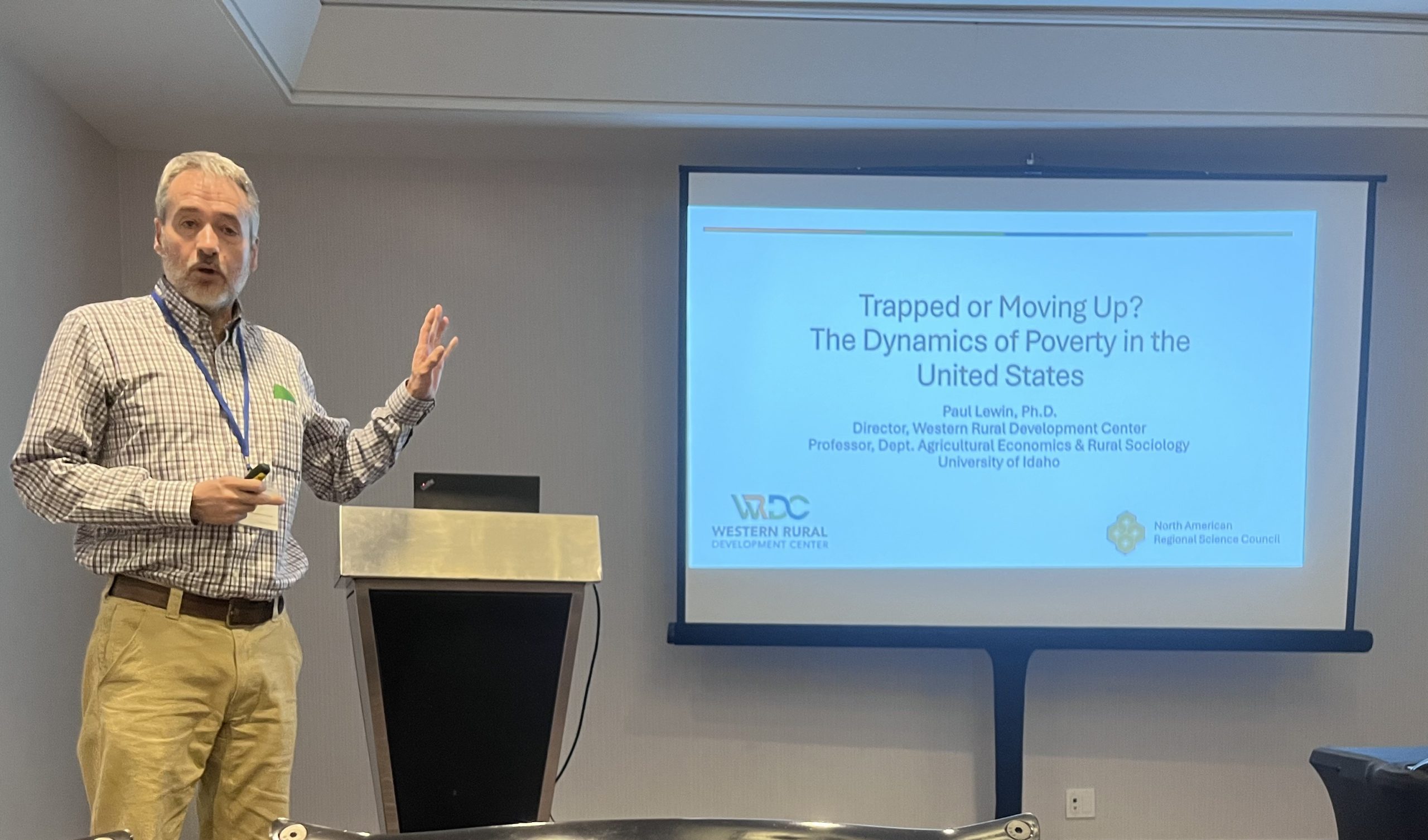
At the 72nd North American Regional Science Conference (NARSC), WRDC researchers Dr. Paul Lewin and Dr. Nadeeka Weerasekara shared new findings on why some families stay in poverty while others manage to move out. Their work uses 22 years of national household data to better understand the factors that shape economic mobility in the United States.
Key Insights from the Study
The research shows that poverty is influenced by more than income alone. Many families remain in poverty because they face structural barriers that limit their ability to build assets. These barriers include limited access to transportation, childcare, healthcare, digital connectivity, education, employment networks, and affordable credit.
Even when income improves for a short period, these challenges can make it difficult for families to achieve long-term stability. This idea of a poverty trap is especially relevant for rural communities where distance and service gaps can make these barriers harder to overcome.
Why This Matters for Rural Communities
The findings underscore the importance of policies and programs that help families build assets over time rather than only address short-term needs. Improving access to essential services and financial tools can create real opportunities for families to gain stability and strengthen rural economies.
Supporting the WRDC Mission
This work supports the WRDC mission to improve rural well-being through research, collaboration, and practical solutions. By helping leaders understand the structural forces that contribute to long-term poverty, WRDC continues to support efforts that build stronger and more equitable communities across the rural West.