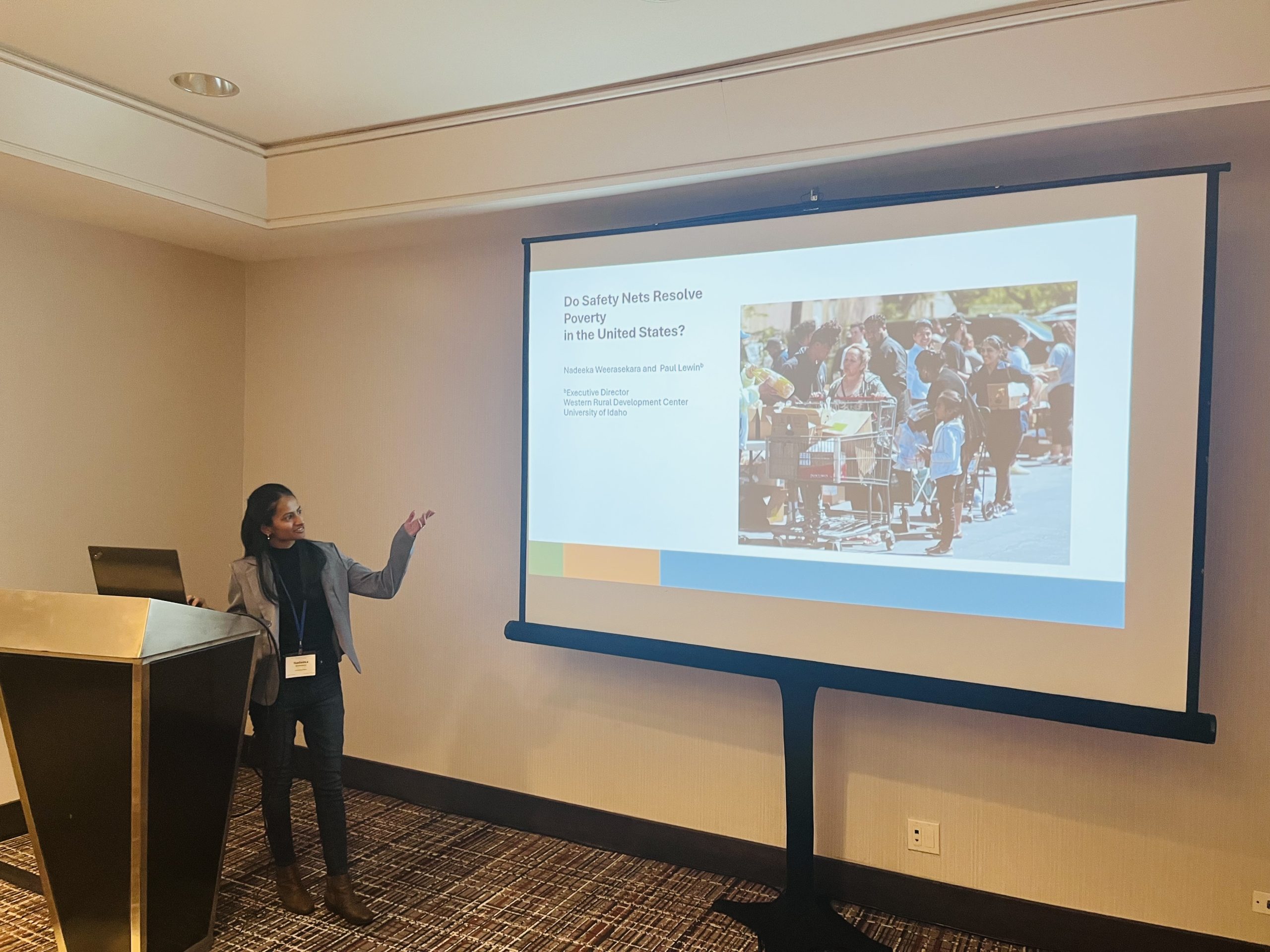
Do Safety Nets Resolve Poverty in the United States?
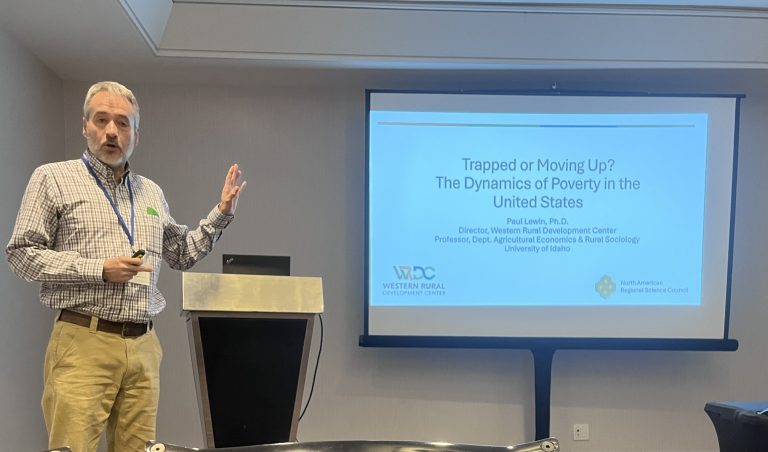
New research presented at the 2025 North American Regional Science Council (NARSC) meeting takes a closer look at a long-standing question in poverty research: Do safety net programs help families permanently escape poverty, or do they mainly address short-term hardship? WRDC researchers Dr. Nadeeka Weerasekara and Dr. Paul Lewin analyzed more than three decades of longitudinal household data to understand how safety nets influence a family’s ability to exit and remain out of poverty.
What the Study Examined
Using data from the Panel Study of Income Dynamics (PSID), the study tracks how families move in and out of poverty over time. Rather than focusing on a single program, the research examines the combined effect of multiple anti-poverty supports, such as SNAP, TANF, and the Earned Income Tax Credit. Using survival analysis, the team assessed how safety nets affect the likelihood of leaving poverty and the likelihood of returning to poverty later.
Key Findings
The results suggest that safety nets often help families leave poverty in the short term, but these exits are not always durable. Many households that used benefits at the time they moved out of poverty were more likely to fall back into poverty in later years. Several factors may help explain this pattern, including limited benefit levels, policy-induced gaps, and the low wealth base of many families. The study also notes that some households may avoid higher earnings because they fear losing essential benefits before they have enough assets to remain stable.
Implications for Rural Policy and Practice
These findings point to the importance of long-term strategies that help families build economic resilience. Programs that address immediate needs can provide important relief, but they may not be sufficient to create lasting mobility. Policies that support education, healthcare access, transportation, community development, and other structural improvements can play a valuable role in reducing persistent poverty, especially in rural communities where gaps in services and economic volatility can be more severe.
Taken together, the results show that while safety nets can create a pathway out of poverty, this path is not always secure. Families who leave poverty with the support of benefits face a higher risk of returning, which highlights the need for approaches that strengthen long-term stability rather than temporary relief. The study offers useful insights for policymakers and practitioners working to design programs that better support lasting economic mobility and create stronger foundations for families across the United States.