Estimating the Impact of wildfires on firm migration in the Western U.S.
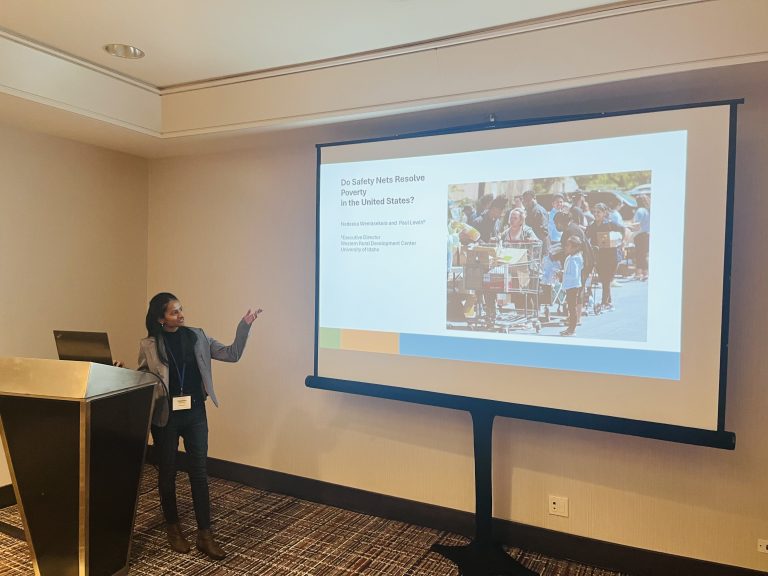
At the recent North American Regional Science Council (NARSC) meeting in Denver, new WRDC-supported research offered fresh insight into how wildfires shape the economic landscape of rural communities. Richard Acquah-Sarpong, a WRDC Graduate Assistance Grantee from Oregon State University, presented findings from his study, Estimating the Impact of Wildfires on Firm Migration in the Western U.S.
What the Study Examined
The research explores how wildfire events influence firm migration patterns, a question with significant implications for the long-term stability and vitality of rural economies. Using business-level data, the project links firm locations to a detailed wildfire exposure index that incorporates both smoke exposure and population-weighted burned area. This approach captures not only the direct fire damage but also the broader environmental disruptions businesses experience during and after wildfire events.
By connecting these environmental factors to firm behavior and tracing firm locations over time, the project begins to quantify how natural hazards may prompt businesses to relocate or shift operations, and how quickly these responses occur, offering an early look at the economic consequences that unfold beyond the immediate fire event.
Why This Matters for Rural Communities
For communities across the West, wildfires increasingly represent not only environmental and public health challenges but also potential disruptions to local economic systems. Understanding how firms respond to wildfire exposure can help leaders anticipate changes in employment, investment, and regional economic resilience.
The study’s integration of exposure data and firm-level migration patterns offers a foundation for assessing which areas may be more vulnerable to business loss and which sectors may be most affected.
Next Steps in the Research
Next phase of Richard’s work will include policy simulations and scenario modeling designed to explore how different wildfire conditions or mitigation strategies might influence future firm behavior and how wildfire-induced firm migration affects local economic development in affected areas. These efforts aim to provide decision-makers with practical tools to support economic planning, disaster preparedness, and long-term resilience. As the project progresses, its findings are expected to contribute valuable evidence to discussions about rural economic development and the resources required to strengthen communities facing growing wildfire risks.