Understanding Place, Building Stronger Connections: WRDC’s Alaska Visit
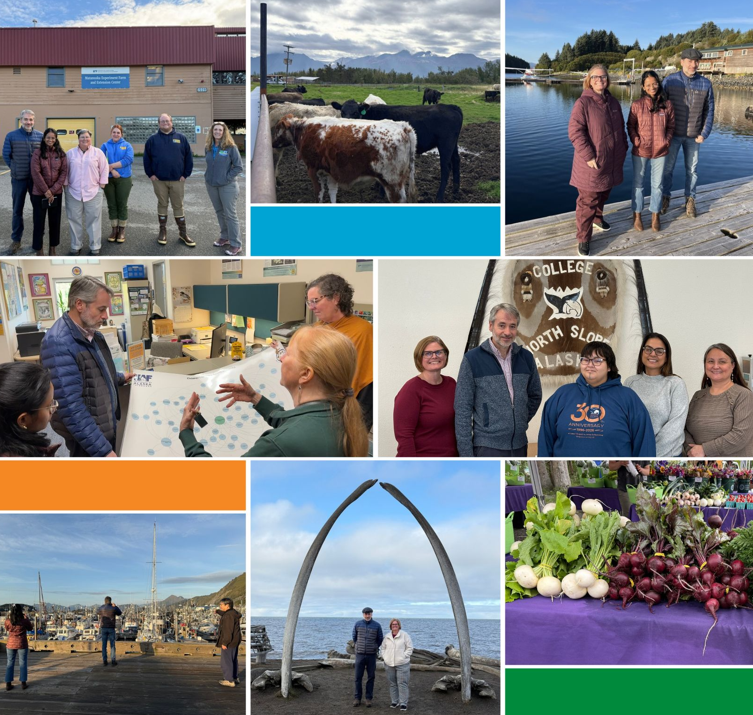
In September, Western Rural Development Center (WRDC) staff traveled from Idaho to Alaska to visit the state’s two land-grant institutions, strengthen partnerships, and gain firsthand insight into the opportunities and challenges facing Alaska’s rural communities. These visits are an important part of WRDC’s commitment to understanding local contexts, building relationships, and ensuring that programs and resources are responsive to the unique needs of the communities we serve.
Utqiagvik, Alaska
The first stop was Utqiagvik, the northernmost city in the United States, where staff met with land-grant partner Iḷisaġvik College and connected with representatives from Voice of the Arctic Iñupiat, the Inupiat Community of the Arctic Slope, and the North Slope Borough. Staff also visited local businesses, the library, museum, and community facilities to learn more about Iñupiat culture, subsistence hunting and fishing traditions, economic drivers, and daily life on the North Slope.
Palmer, Alaska
In Palmer, WRDC visited University of Alaska Fairbanks’s Matanuska Experiment Farm and Extension Center to learn about ongoing research and Extension programming that supports communities across the state. Staff also visited the local farmers market to gain additional perspective on local agriculture and food systems.
Kodiak, Alaska
While in Kodiak, WRDC met with faculty from the University of Alaska Fairbanks Sea Grant program and toured the Kodiak Seafood and Marine Science Center. These conversations provided valuable insight into the commercial fishing industry, marine research, workforce development, and the unique opportunities and challenges of island communities.
Fairbanks, Alaska
The final stop included meetings with faculty and program staff from the University of Alaska Fairbanks Cooperative Extension Service, as well as a visit to the Cold Climate Housing Research Center. Discussions focused on Extension programming, housing innovations, and approaches to serving remote communities across Alaska.
Alaska’s rural communities face unique circumstances shaped by geographic isolation, dependence on imports, extreme climates, and vast distances between population centers. By spending time in communities, listening to local leaders, and learning directly from land-grant partners, WRDC gains a deeper understanding of these realities. These relationships and insights help inform future programming, foster meaningful collaboration, and ensure that WRDC’s work remains relevant and responsive to the diverse needs of rural communities throughout the West.