Dive Into the Data: Western Region Household Baseline Survey 2024 Dataset Now Available
WRDC is excited to announce that the Western Region Household Baseline Survey 2024 dataset is now available for public use!
WRDC Graduate Assistance Grantee Richard Acquah-Sarpong presented new research at the 72nd NARSC Annual Meeting that takes a deeper look at how wildfire exposure influences firm migration across the Western United States. By combining business-level data with a wildfire exposure index that captures smoke exposure and population-weighted burned area, the study offers an early view into how environmental hazards can reshape local economic landscapes. This work is positioned to inform future planning efforts and support stronger economic resilience in rural communities.
WRDC researchers Nastasya Winckel and Paul Lewin analyzed nearly two decades of national data to understand better whether self-employment offers a meaningful pathway out of poverty for low-income workers. Their findings show that financial outcomes vary widely and often depend on economic conditions, duration in self-employment, and prior income levels. The study provides a nuanced look at the trade-offs involved and raises important questions for researchers and practitioners focused on poverty alleviation and labor market dynamics.
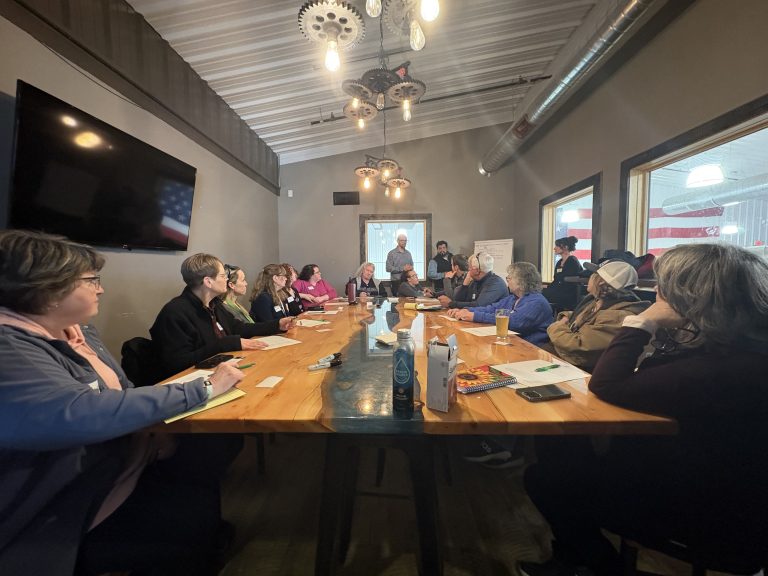
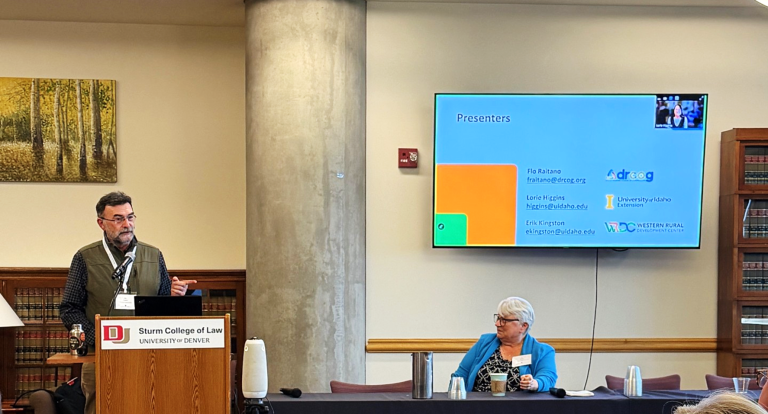
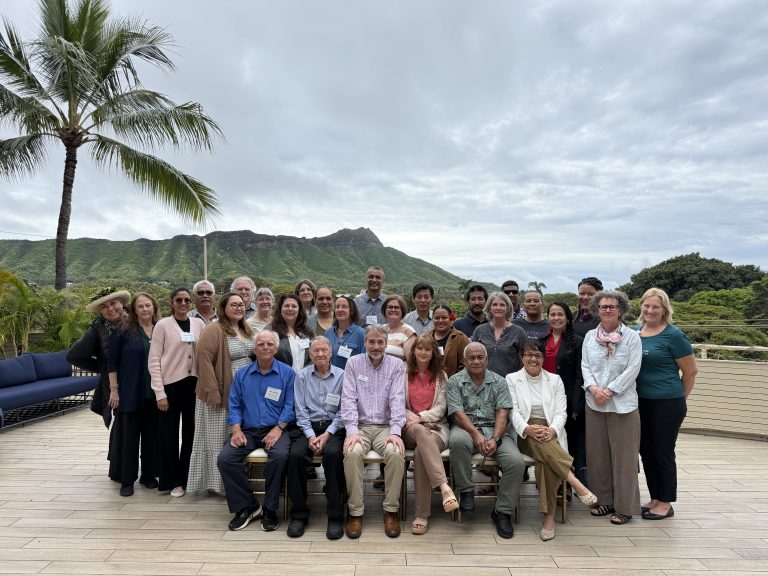
WRDC is committed to strengthening relationships with partners across the West. This fall, we connected in person with Western Land-Grant Universities, 1994 Tribal Colleges, and Tribal Extension leaders to learn about their work, understand local priorities, and explore opportunities for collaboration that support rural communities and drive rural prosperity throughout the region.
WRDC researchers Nadeeka Weerasekara and Paul Lewin recently presented new findings at the 72nd NARSC Annual Meeting that explore how safety net programs influence a family’s ability to move out of poverty and remain stable over time. Their analysis of more than three decades of household data shows that while safety nets often support short-term progress, many families still face challenges that increase the risk of returning to poverty.
WRDC researchers Paul Lewin and Nadeeka Weerasekara presented new findings at the 72nd NARSC that explore why some families remain in long-term poverty. Their analysis of 22 years of national data shows that structural barriers, such as limited access to transportation, childcare, healthcare, digital connectivity, and affordable credit, limit families’ ability to build assets, even when income rises, keeping families trapped in poverty.
At WRDC, we know that strong relationships are key. We don’t want to be just another name in your inbox or a program you’re unsure about. That’s why we’re hitting the road to visit as many land-grant institutions (LGIs) as possible, face-to-face, to learn about your goals, challenges, and vision. Your success is our mission, and we’re here to support you.
On September 9, 2025, the Western Outdoor Recreation Working Group held its inaugural meeting, marking a milestone in fostering collaboration among Western Land-Grant Universities and partners.
What helps rural students not just get to college—but succeed there and beyond? That’s the driving question behind the Assessing Rural Education Assets and Strengths (AREAS) project, led by Dr. Krista Soria from the University of Idaho’s College of Education, Health, and Human Sciences in partnership with the WRDC.
Guiding the Way- Challenges and Opportunities in Outdoor Guiding- Dec. 4, 2025 (12-1pm MST)